
High-end audio is not based on what you pay, but on what you get!
The world of high-end audio has a strange phenomenon: the higher the price, the quicker some “connoisseurs” assume that the product “must be amazing”. A glossy brochure, heavy enough to serve as a doorstop, and a price tag with three, four zeros or more — et voilà, it sounds fantastic… right?
At PrimaLuna and FLOYD, we try to avoid that pitfall. Not because we want to be modest. But simply because quality must be audible, visible, tangible, and in many cases also measurable. And above all, the costs must be justifiable in all cases.
Some “audiophile experts” dare to claim that we use cheap components. But anyone who really looks under the hood and knows what they’re talking about will discover a different story.
The truth is not in the middle; the truth begins at the beginning … and ends, precisely, at the end.
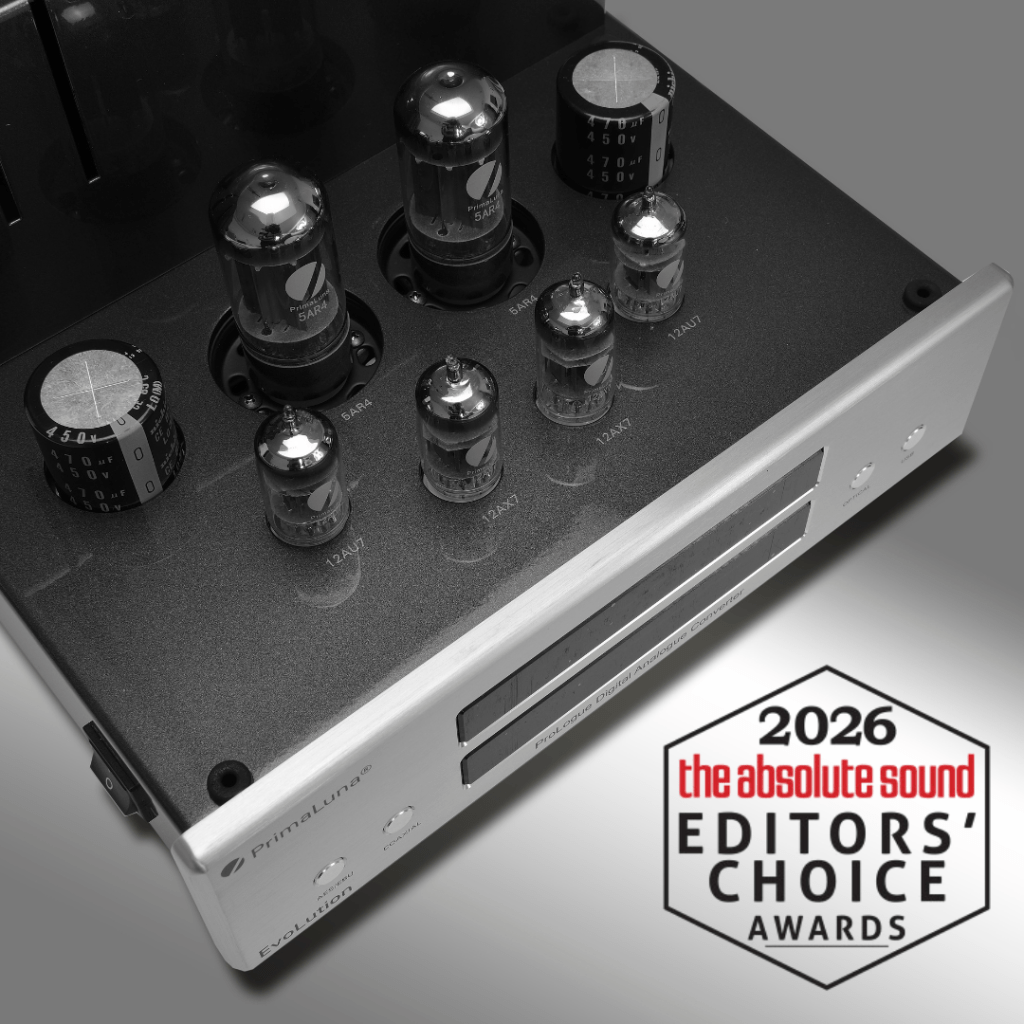
The tubes used are essential to the end result. At PrimaLuna and Floyd, we have mixed feelings about this. The best is not good enough, but it must also be feasible in terms of production numbers. NOS tubes cannot therefore be used. The starting point is therefore the use of good quality, contemporary production tubes. This allows the end user to assess the quality of the amplifier and, through tube upgrades, bring the end result to the top according to their taste and financial means.
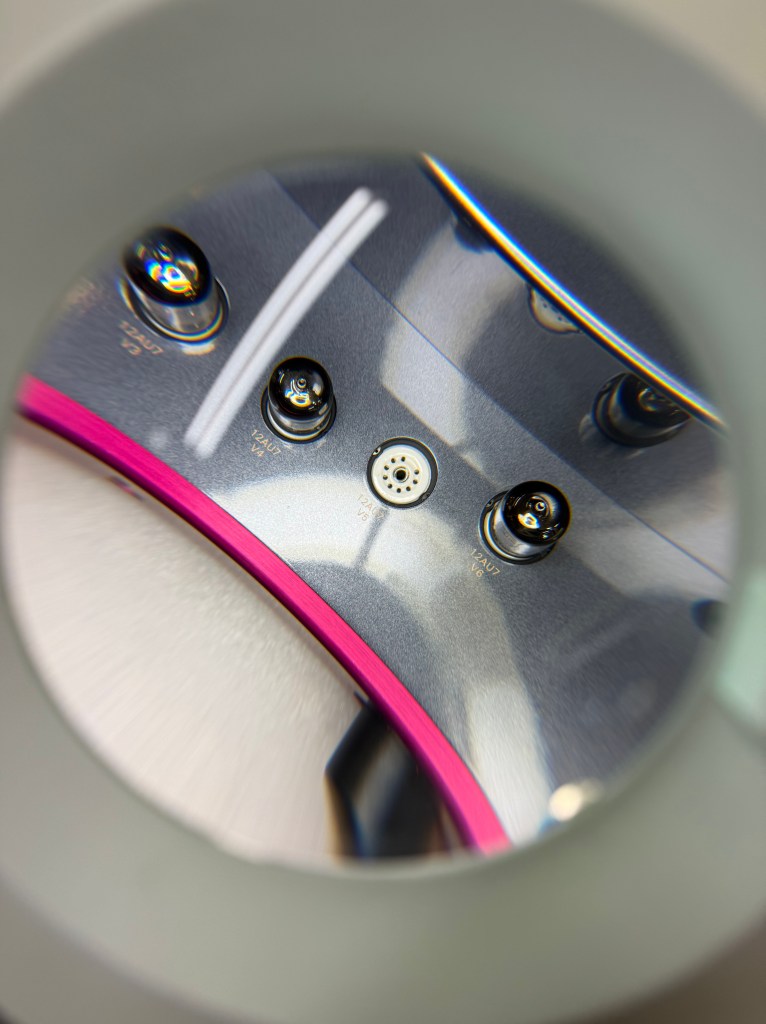
But – and this is what this story is largely about – the quality of the tube stands or falls with the first contact the tube makes with the rest of the amplifier. That is why we pay special attention to what many manufacturers consider an unimportant component: the tube socket.
It seems simple. A few pins in a holder. But the reality? It’s different. It is the most sensitive point for, in particular:
1. microphony
2. thermal load
3. voltage breakdown
4. contact resistance
5. noise
That’s why we don’t use the cheapest tube sockets — but functionally the best:
Ceramic tube sockets for all tubes used. They have high heat resistance, are stable in shape, and have a long service life.
Where appropriate, we use mechanical decoupling by mounting the tube sockets in damping EPDM rubber. Not always the easiest choice, but definitely the right one.
We do what has been proven to work, not necessarily because it sells—although fortunately it does!
Other brands use plastic or phenolic resin (bakelite) sockets because they are three times cheaper. They do the same thing—until the heat strikes. We never mount tube bases on a printed circuit board. In the long run, that can only cause problems. It can ultimately lead to distortion, crackling, crosstalk, and noise.
At PrimaLuna and FLOYD, there is no such thing as “cost savings you can’t see.” Except perhaps for the fact that we don’t use large, excessive aluminum housings, but a functional (better?) shielding iron chassis. Sober, classic, timeless.
Our philosophy is simple: “If a component affects the music, it should be the best component that pays for what it does — not for what it appears to be.”
No magic spells. No nonsense. Just sensible design and production. High-end audio has sometimes fallen into a kind of alchemy, where everything is mystical.
We choose:
1. High-quality transformers with ample bandwidth
2. MOSFET power stages with linear power supplies
3. Tubes with optimal settings
4. Short signal paths
5. High-quality soldering
6. Pure ground structure
7. Clean high voltage with chokes where necessary and sensible
And yes — all of that costs money. But it is not a prestige surplus, nor is it exotic marketing material.
The result: Down-to-earth perfection
Our amplifiers are now renowned for their:
• long service life
• low noise and hum
• high reliability
• stable sound quality over the years
• genuine high-end performance at a fair price
That’s not a trick. That’s craftsmanship.
Why do we take this approach?
Because we are not interested in producing devices that appear to be superior because they are priced unrealistically high. We build amplifiers for people who listen. For people who dare to judge for themselves. For music lovers. Not for snobs.
For PrimaLuna and Floyd, high-end audio should be an honest audio product. Not a “status symbol.” Not that we have anything against status symbols, but we prefer to make something like what is described in this story. We also think it is more difficult to make a realistically priced high-end device in a manageable and placeable housing. In that sense, big is not always BETTER, but it is certainly easier to produce!
And if anyone claims that we use cheap parts or cheap production methods, we can only say: Go and see for yourself. Go and listen. And compare. Then you’ll know enough! PrimaLuna & FLOYD. Certainly not the most expensive, but still among the best!

 Dé Durob Audio blog - Le Blog de Durob Audio